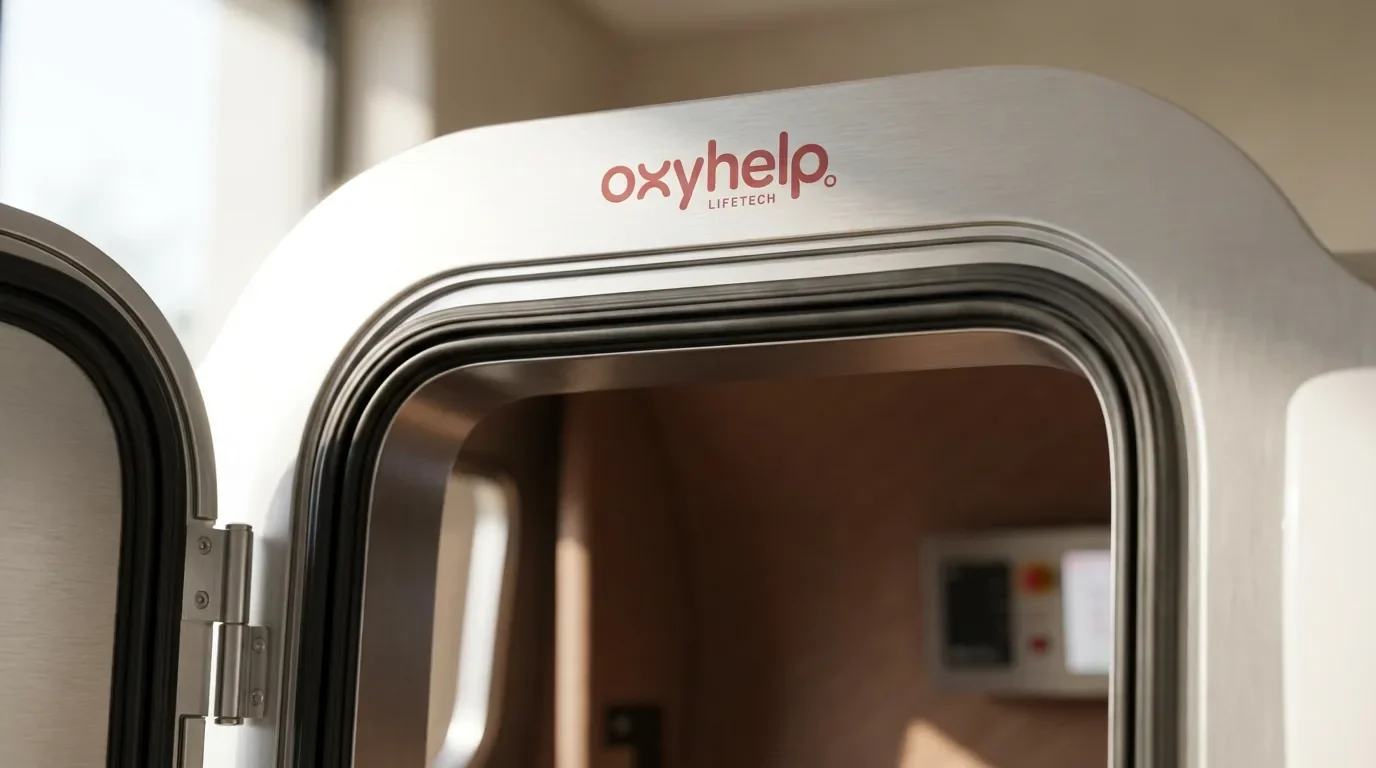
Yes, a soft inflatable chamber delivers real pressure. It is just not much of it, and pressure turns out to be the smaller half of the story. Most soft chambers are rated at 1.3 atmospheres absolute, which is about 4 psi above the room you are standing in. A few reach 1.5. A hard-shell chamber is a pressure vessel, built and tested for considerably more, and OxyLife runs at 1.5 by design. The gap on the gauge is real but modest. The gap in what happens to the air around you during a forty-minute session is not, and that is where the two designs stop being comparable.
This is a comparison of two pieces of equipment: materials, pressures, seals and air. It makes no medical claims for either, and it is written by a manufacturer of one of them, so read it with that in mind and check the numbers against any other source you like.
What the pressure numbers say
Pressure in a chamber is measured in atmospheres absolute, ATA. One ATA is the air around you at sea level. At 1.3 ATA the air inside presses thirty percent harder, about what you feel three metres under water. At 1.5 it is fifty percent harder, roughly five metres down. Above 2.0 ATA you are in clinical, supervised territory: harder on the ears, and outside anything a wellness chamber should attempt.
A soft chamber is a fabric bag with a zip, a relief valve and a compressor. The fabric and the zip set the ceiling, which is why the market settled at 1.3 ATA; the rating is a limit of the seams, not a choice about what is useful. A hard-shell chamber is a metal and acrylic vessel with a door on a gasket. Its ceiling is set by engineering, not by stitching: OxyLife is rated at 1.5 ATA and the shell is tested at 2.4, which leaves a margin of safety the design never uses.
So on pressure alone the honest verdict is this: both live in the mild range that home and wellness use calls for, the hard shell reaches the top of that range with headroom to spare, and the soft shell sits at the bottom of it with none. If pressure were the whole question, the difference would be worth knowing but not decisive.
The 24 percent versus 100 percent argument is the wrong argument
Sellers of soft chambers usually feed an oxygen concentrator into the bag. The oxygen mixes with the cabin air and settles somewhere around 24 percent. Sellers of larger chambers answer with the number 100, as if a higher percentage in the cabin were the upgrade. Both sides are arguing about the wrong quantity.
What reaches your blood depends on what reaches your mouth and at what pressure, for how long. Flooding a cabin with oxygen is neither necessary nor wise; our article on why 100 percent oxygen under pressure is toxic goes through the dose arithmetic. OxyLife keeps the cabin on ordinary air and delivers oxygen through a mask from a concentrator, so the percentage in the room is not the metric, the mask is. A soft chamber cannot separate the two, because the bag is the only volume it has. That is a structural limit, not a setting.
Sealed versus ventilated: the difference you can feel
A soft chamber is sealed by design. The compressor adds air to build pressure, the relief valve bleeds a little to hold it, and the small flow from a concentrator is the only fresh gas coming in. Everything you exhale stays with you: carbon dioxide, moisture, heat. By the second half of a session the air is warm, humid and heavier in CO2 than any room you would choose to sit in.
That is the feeling people describe as stuffy, and it is also why a session in a sealed chamber can feel like nothing at all. It is not the pressure. It is stale air. A ventilated hard-shell chamber pushes fresh air in and vents stale air out for the entire session, at a flow calculated from the number of people inside, so minute forty feels like minute one. Two chambers can look similar from the outside and behave nothing alike on the inside, and this is the axis the hard-versus-soft debate keeps missing.
Structure, seals and what happens over the years
A soft chamber has a fabric skin, a long zip and seams that flex on every inflation. Fabric fatigues, zips wear, and the relief valve is the safety system. It sits on the floor, it holds one person lying down, and getting in and out means crawling through the opening. None of this is a flaw for what it is; it is what a bag can be.
A hard shell is a rigid vessel with a hinged door, a gasket, a window, and seating. Pressurisation is automated and gradual, there are stop buttons inside and out, emergency depressurisation takes forty seconds, and if power fails the chamber releases itself. It can seat one person or six, sitting upright, with a screen in reach. It is heavier, it needs a room, and it costs more, which is the trade the buyer is actually making.
Are soft chambers worth it?
Sometimes. If the budget is fixed, the use is occasional, the chamber has to be stored between sessions or moved between rooms, and a single person lying down at 1.3 ATA is the whole requirement, a soft chamber does that job and does it at a fraction of the price. That is a legitimate choice and no comparison should pretend otherwise.
What you give up is everything above: pressure headroom, air that stays fresh, a structure that does not fatigue, seating, and the ability to keep oxygen at the mask rather than in the room. Buy on ventilation and build, not on an oxygen percentage. The single most useful question to ask any seller, of any chamber, is what the CO2 in the cabin is at minute forty and how they know.
The short version
A soft inflatable chamber delivers real but limited pressure, typically 1.3 ATA, in a sealed bag where your own breath accumulates. A hard-shell chamber reaches 1.5 ATA with margin, seats people upright, and, if it is ventilated, keeps the air fresh for the whole session. The percentage of oxygen in the cabin is the wrong number to compare; the pressure, the mask and the air quality are the right ones.