Normal Breathing
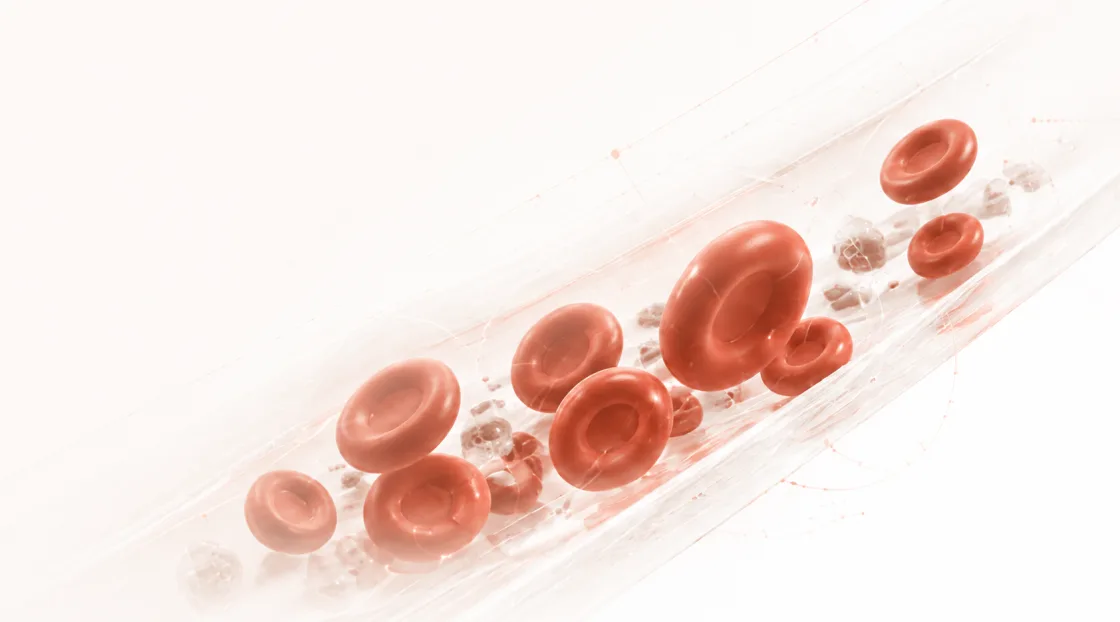
1 ATARed blood cells are about 97% saturated already. Very little extra oxygen travels in the plasma.

A plain-language look at the physics of pressure and oxygen. No hype, no medical promises. Just what happens, why it happens, and what the published research does and does not say.
Every term you meet on this page and across the site, defined simply.
No jargon left unexplained.
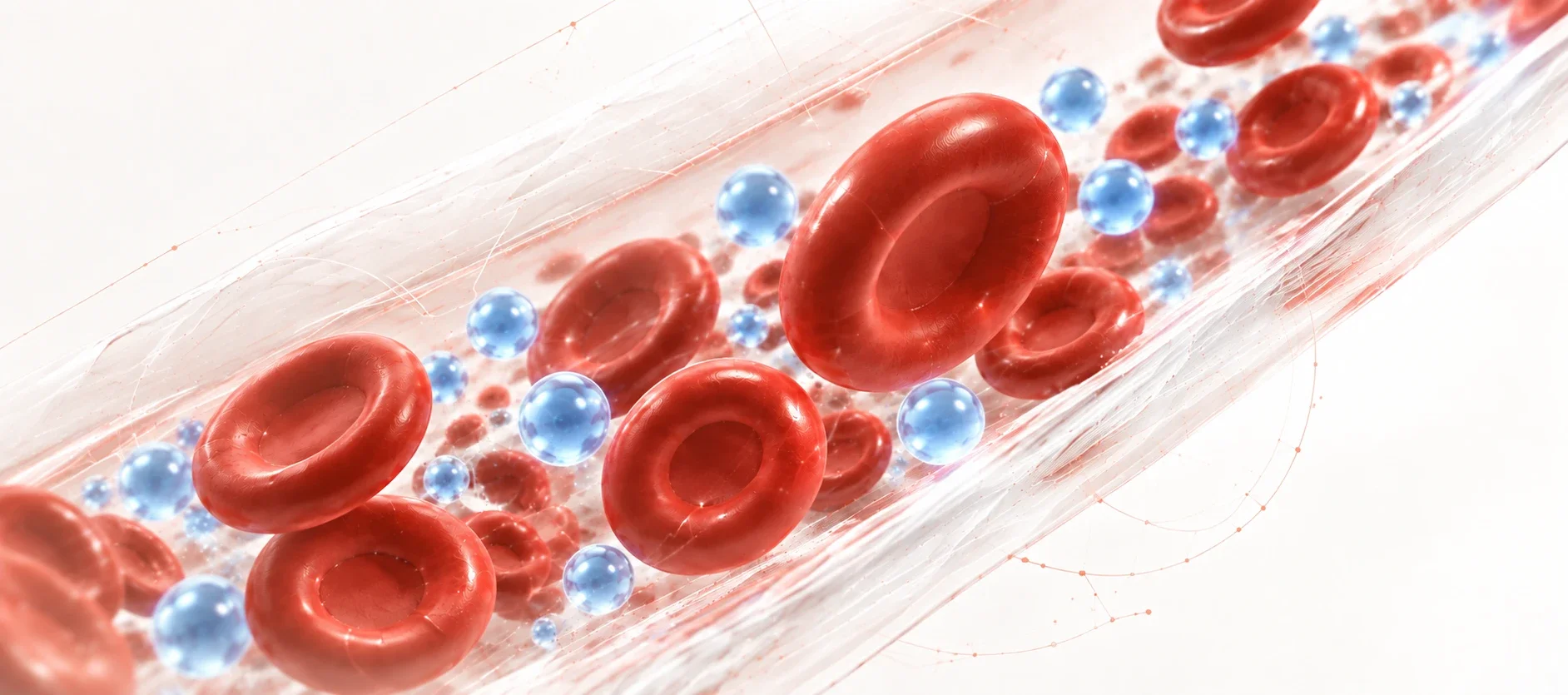
At normal pressure, oxygen rides almost entirely on your red blood cells, which are already nearly full. Raise the pressure and oxygen also dissolves straight into your plasma, reaching places ordinary breathing can't.
Red blood cells are about 97% saturated already. Very little extra oxygen travels in the plasma.
The red blood cells are just as full, but now oxygen dissolves into the plasma too, reaching deeper into tissue.
Pressure is the whole point of a hyperbaric chamber. Here is what it means, how it is measured, and what actually changes as the number goes up.
Baseline
1.0ATA
Your everyday baseline, no chamber involved. Oxygen rides almost entirely on your red blood cells, which are already nearly full.
Home & Wellness Usage
1.3–1.5ATA
The gentle range people use for recovery, energy, sleep and relaxation. Comfortable enough for daily use at home, in clinics and in sports centres, with no medical supervision.
Only under medical supervision
2.0ATA
At 2.0 ATA, hyperbaric use crosses from wellness into medicine. It needs supervision, it is harder on the ears, and it demands stricter safety.
~2.8ATA
Most supervised medical treatments run between 2.0 and 2.8 ATA, in purpose-built clinical chambers. Nothing in this range belongs at home.
3.0ATA
The most intensive medical cases, in short sessions. Above this, oxygen becomes risky, so 3.0 is the practical ceiling.
10 m underwater = 1 ATA
Every 10 metres underwater adds 1 ATA, so 1.5 ATA feels like being about 5 metres down. Absolute pressure = 1 (the air around you) plus the pressure added inside.
1 ATA = 101 kPa = 14.7 psi.
The problem
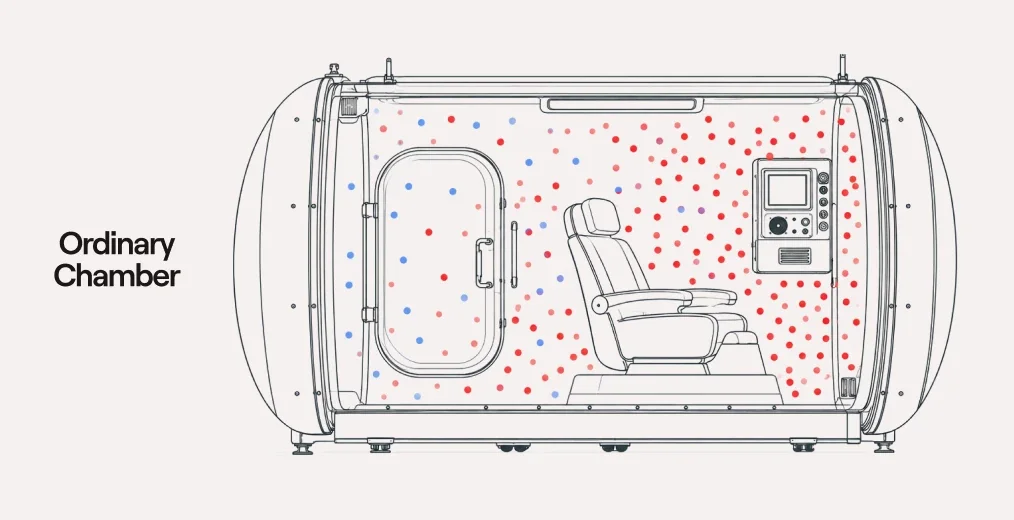
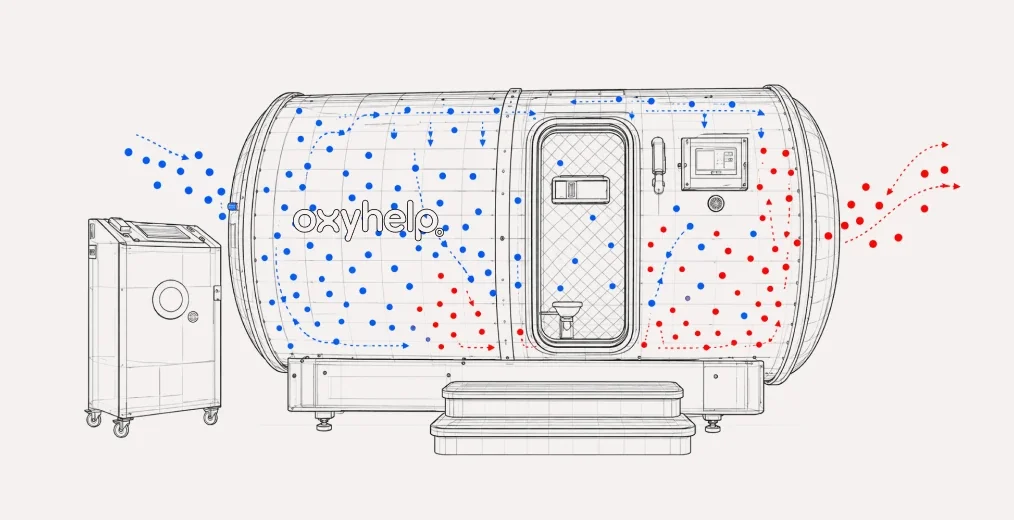
In a sealed chamber, the CO2 from your own breath has nowhere to go. It builds up, the air gets stuffy, and that stale air is often why a session in some chambers can feel like nothing at all.
The solution
Fresh air is pushed in and stale, CO2-heavy air is pushed out, the whole time you are inside. The air never gets a chance to go stale.
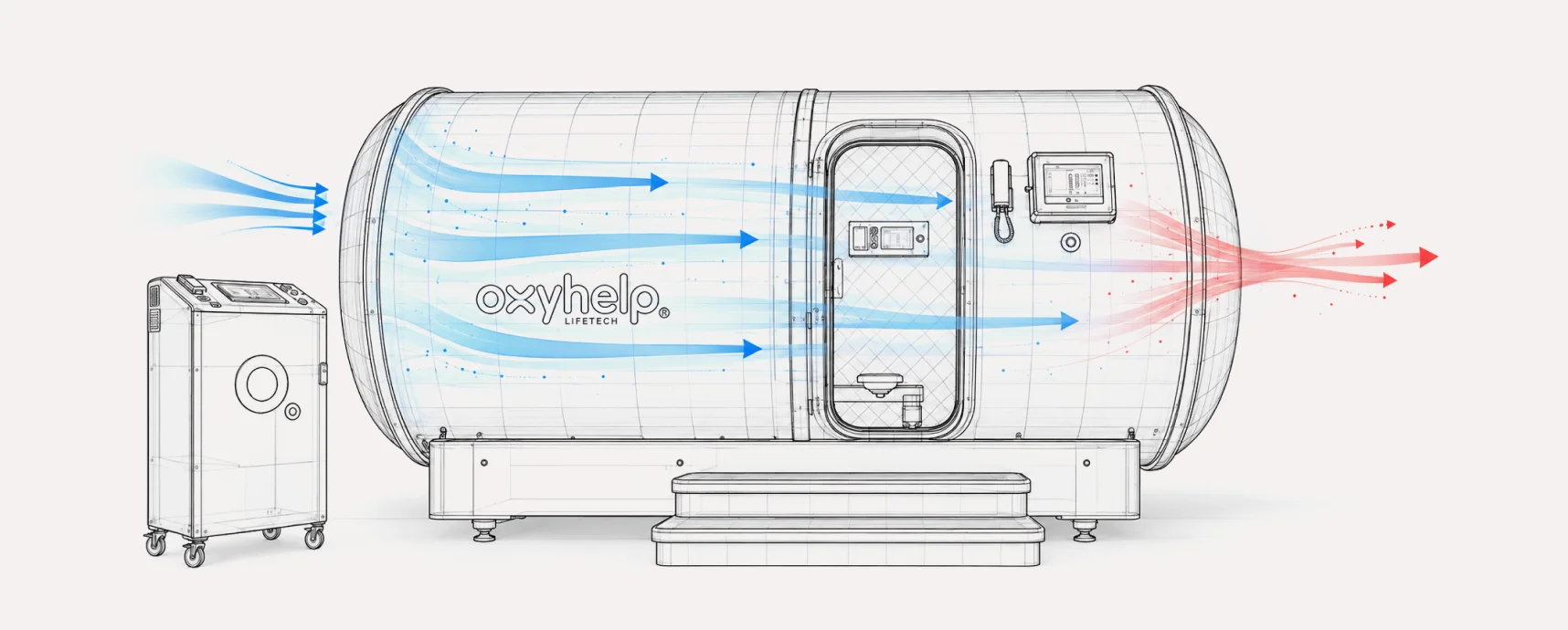
Put people in a sealed box and the air turns stale fast. Every breath adds carbon dioxide.
This is the part almost nobody explains, and it is exactly where OxyHelp is different.
Every one of these is checkable.
Apply them to us as readily as to anyone else.
Myth 01
Reality
What matters is what reaches your lungs, not what leaves the tank. A mask that traps your own exhaled breath delivers oxygen mixed with your own carbon dioxide, and nobody quotes that number. Ask for the oxygen fraction at the airway, and ask where the gas you breathe out goes.
Myth 02
Reality
That figure comes from a hospital chart for a few litres per minute at sea level. It says nothing about a dedicated concentrator running roughly twenty litres per minute into a sealed nasal interface at 2 ATA. Same device name, entirely different physics.
Myth 03
Reality
At stable pressure, a ventilated chamber has to make a sound, because air is moving through it. Total silence after compression stops usually means nothing is flowing, and everything you exhale stays with you.
In our chambers you hear a soft, continuous airflow for the whole session. That sound is the ventilation working.
Myth 04
Reality
Every opening in a pressure vessel removes load-bearing material and concentrates stress at its edges, a square corner far more than a round one. Large windows are an engineering cost, paid for with wall thickness, reinforcement and calculation. Ask to see the calculation, not the view.
Myth 05
Reality
In the EU, that means an MDR 2017/745 certificate from a notified body whose scope covers hyperbaric chambers, with its four-digit number beside the CE mark on the chamber itself. Very few wellness chambers can produce this.
We don't claim medical status. Our chambers are commercial, non-medical, and engineered accordingly.
Myth 06
Reality
Read who signed it. We have seen certificates issued by bodies with no competence to issue them, certificates naming a model the seller never built, and pressure-vessel certificates presented as proof of medical status. You may not know how to read one. An insurer, a landlord or a medical director does.
Myth 07
Reality
Then ask whether the chamber that was tested is the chamber you are buying. A plain shell with no doors or viewports can be tested and certified, the openings cut afterwards, and the chamber sold on the original certificate. The paperwork is genuine. It just describes a different vessel.
Myth 08
Reality
A certificate proves that a design met specific criteria on a specific day. It says nothing about how the chamber ventilates, whether CO2 is monitored, what the mask does to your breathing, or how the chamber behaves in its 4,000th session. Those are the parts you actually live inside.
Short videos from the people who build the chambers: how the physics works, and where the claims stop. Each one opens on Instagram.
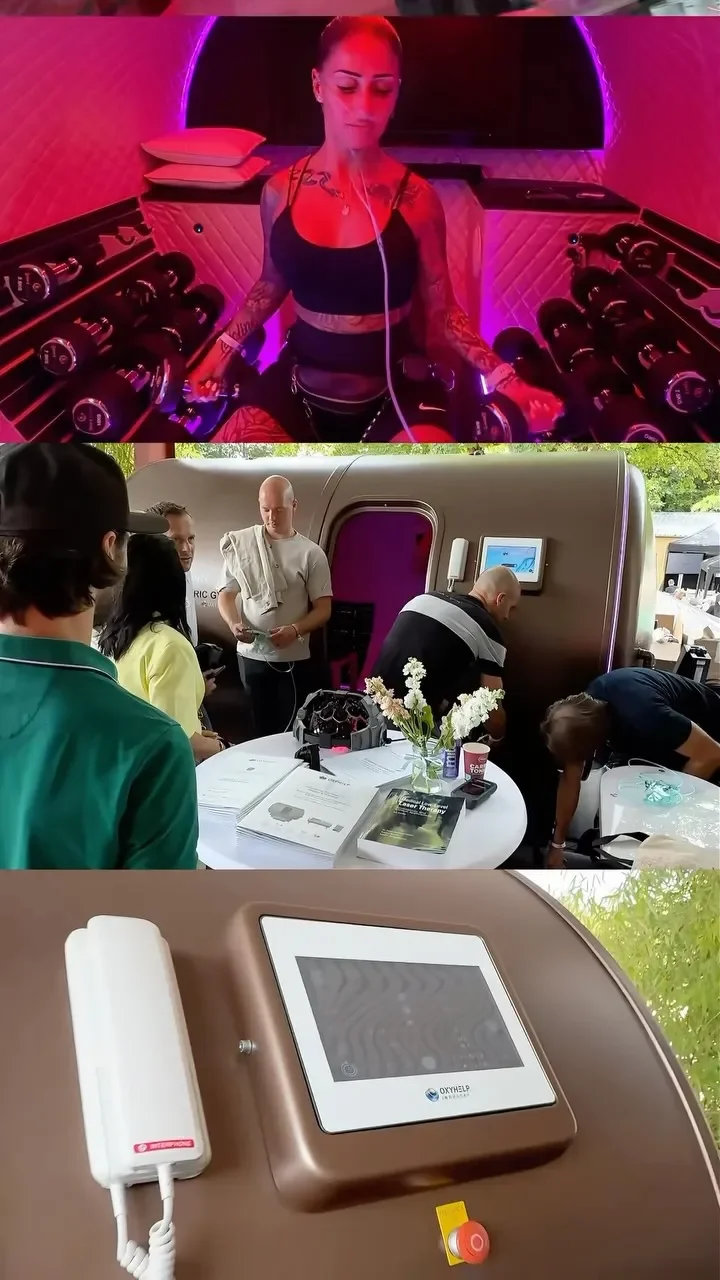
More pressure, more oxygen dissolved in your blood plasma. Physicists call it Henry's Law.

Under pressure, your body moves blood away from healthy tissue and sends it to what's injured or inflamed.

Hospital charts say a nasal cannula delivers little oxygen. Those charts assume low flow, so we measured ours.
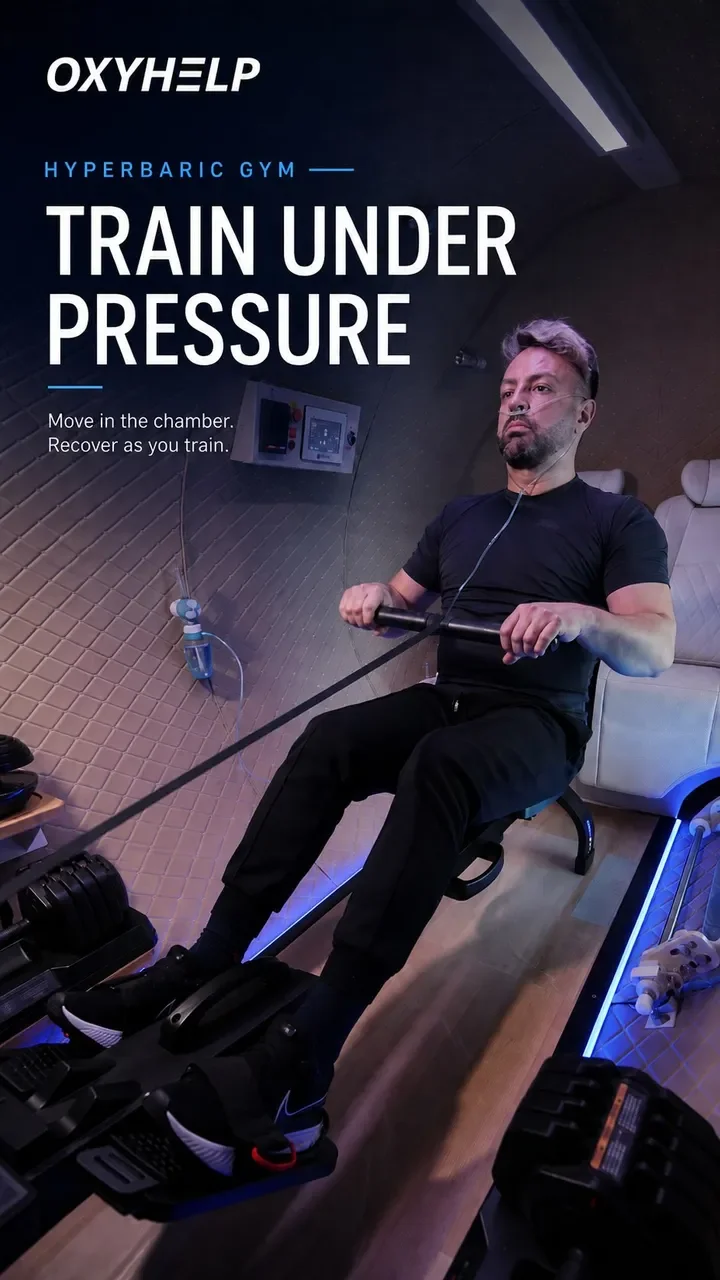
Movement and pressure in the same room, with the air monitored the whole time. Research on training this way is still early.

Nobody walks out of one session a different person. The effect comes from repetition: sessions, not a session.
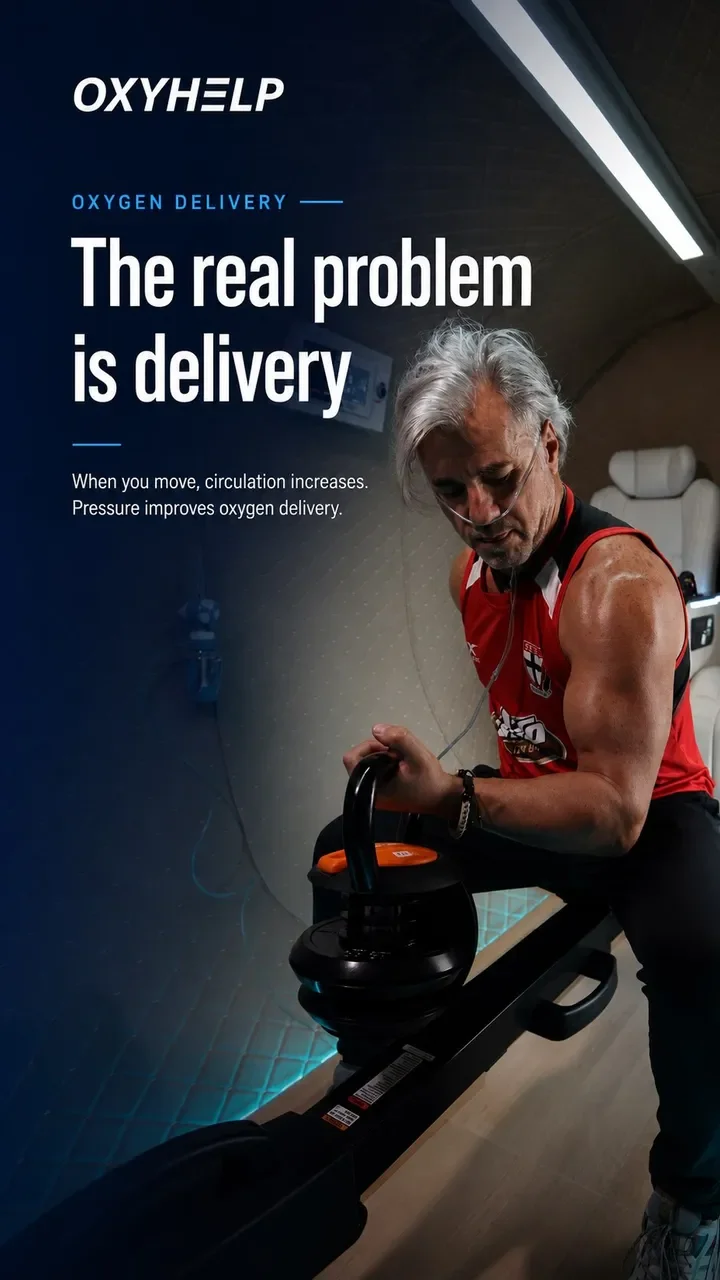
Only one to two percent of oral curcumin reaches the blood. Getting it from the blood into the cell is the other half.
What buyers ask before they commit: what the price includes, how a session runs, safety, and what happens once the warranty is over.
Yes. OxyHelp chambers of different sizes can be installed and used at home, as well as in clinics and wellness centres, provided the space meets the installation requirements. You do not need a member of staff standing beside the chamber to operate valves or manage the pressure throughout a session: the process is automated, and you can control it from the touchscreen inside.
The system works and responds in real time. It measures oxygen and carbon dioxide levels inside the chamber, controls compressor operation and continuously ventilates the chamber with fresh air. The chamber is pressurised with air; concentrated oxygen is delivered separately through the breathing interface. Our patent-pending air-quality architecture is designed to keep oxygen in the chamber atmosphere below 23.5%. If that level is exceeded, the chamber automatically shuts down.
For those who prefer a ready-made programme, an optional package of eight automated Smart Protocols is available. Developed specifically for OxyHelp chambers by Dr Zayd Ratansi, who has more than 26 years of clinical experience and is a member of IHA and IBUM, the protocols let you select a session profile and have the chamber manage its programmed settings.
We’ll review your room, access route and equipment placement to recommend the right chamber and installation plan for your home.
The standard price includes the chamber and its control system. To complete the setup, you need one cooling unit per chamber and one OXYSPA oxygen concentrator per person using it. We list these separately in your quotation, so you can see the full cost of your chosen setup.
OXYSPA is designed specifically to deliver oxygen against the back pressure inside a hyperbaric chamber. It delivers 20 L/min at 1 ATA and 10 L/min in tests at 2 ATA. Its rectangular shape keeps the equipment compact: units can be stacked, or placed in an optional rack. The exhaust can also be routed into suitable building ventilation or outdoors through a window, rather than released into the equipment room.
There is more than one way to bring an OxyHelp chamber into a room. Depending on the model and the access route, it may be delivered fully assembled or brought in as separate sections and assembled on site. This means a doorway that is too narrow for the finished chamber does not necessarily rule out installation.
Before confirming your order, our team checks the entire route, not just the front door. We review the narrowest doorways, corridors, stairs or lift, as well as the space available inside the room. From those measurements, we determine how your chosen chamber can be delivered and installed.
Of course. By 2026, OxyHelp has placed more than 3,100 chambers worldwide, so we can often help you find one to experience near you. Leave your details in our contact form, and a local partner will reach out in a language you’re comfortable with to discuss available locations and arrange a visit.
Every OxyHelp chamber comes with a two-year warranty, which can be extended to five years at purchase. Service and replacement parts remain available after the warranty expires.
Many software issues can be diagnosed and resolved remotely using a Windows laptop. If you notice a technical problem, submit a request at oxyhelp.com/service. Our team will contact you to diagnose the issue and arrange the next steps. When a repair requires a visit, on-site service can be arranged in many locations worldwide.
The main running cost is electricity for the chamber’s compressors, oxygen concentrator and cooling unit. For popular models such as the C2 and C1 E, peak power demand is approximately 6.5 kW. Actual electricity use depends on the chamber configuration and how the equipment operates during a session.
Routine maintenance includes replacing the filters every 800 operating hours or once a year, whichever comes first. You should also allow for personal breathing interfaces, such as nasal cannulas, which are available from pharmacies.
The entrance trim seal needs regular care with a suitable spray. Where shipping arrangements allow, we include this spray in the chamber’s starter pack. Our team will explain the maintenance schedule and provide the relevant instructions when your chamber is installed.
We’d love to hear from you. Fill out the form and we’ll get back to you as soon as possible.
Your message has reached us. Someone from our team will get back to you soon.