Hyperbaric Oxygen Chambers for Spas & Wellness Centres

For spas & wellness centres

Hyperbaric oxygen for
spa & wellness

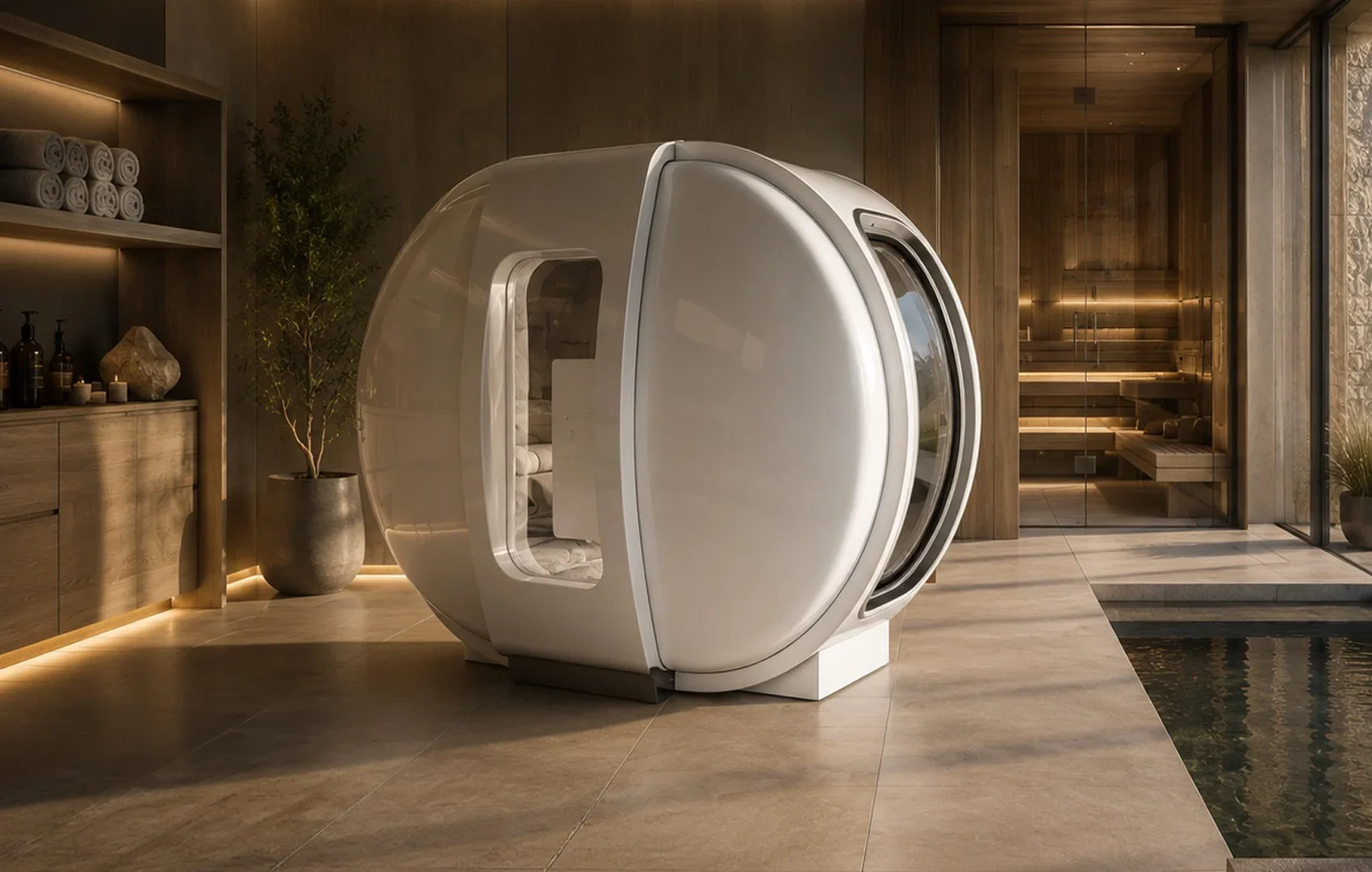
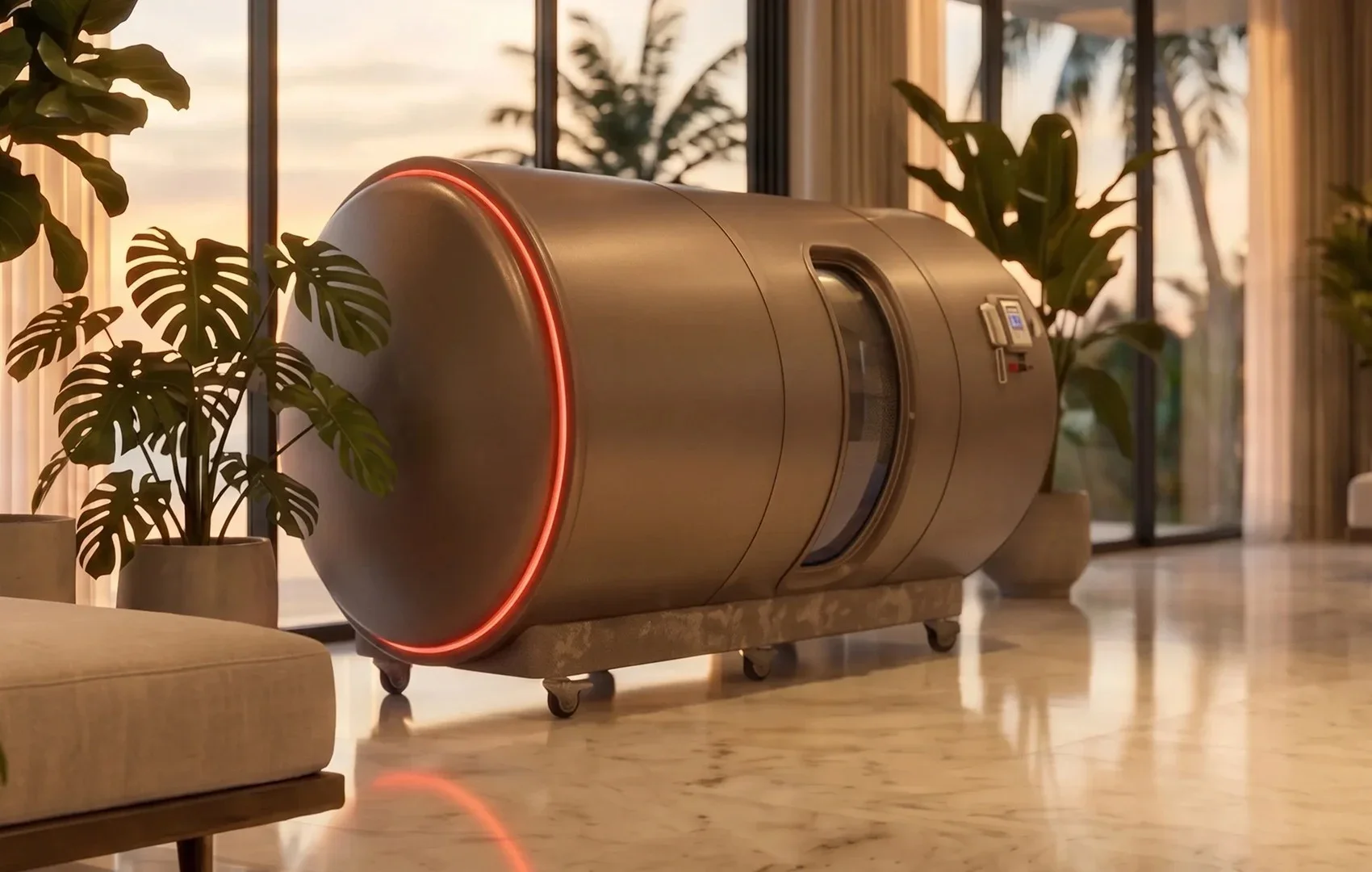
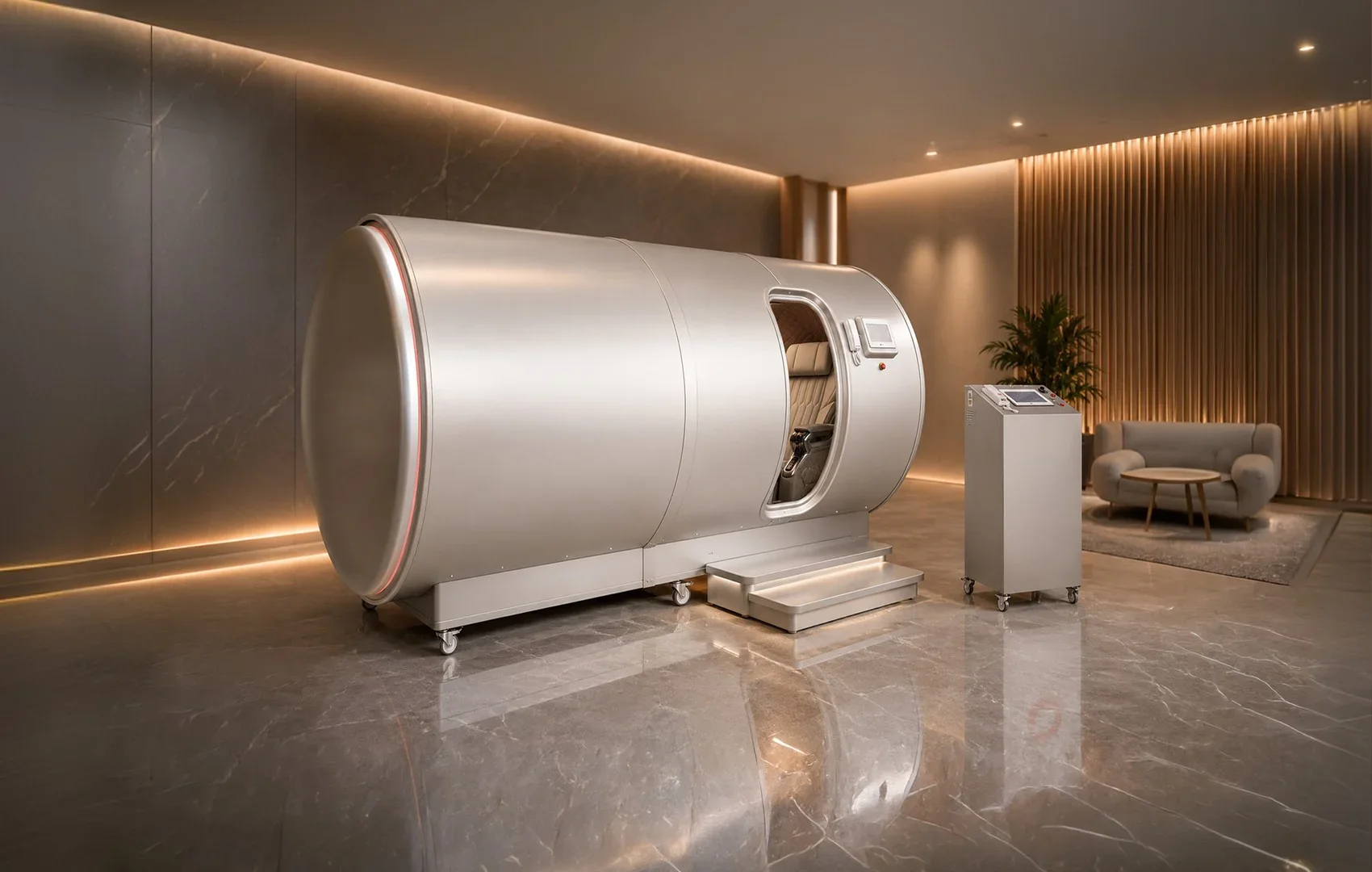
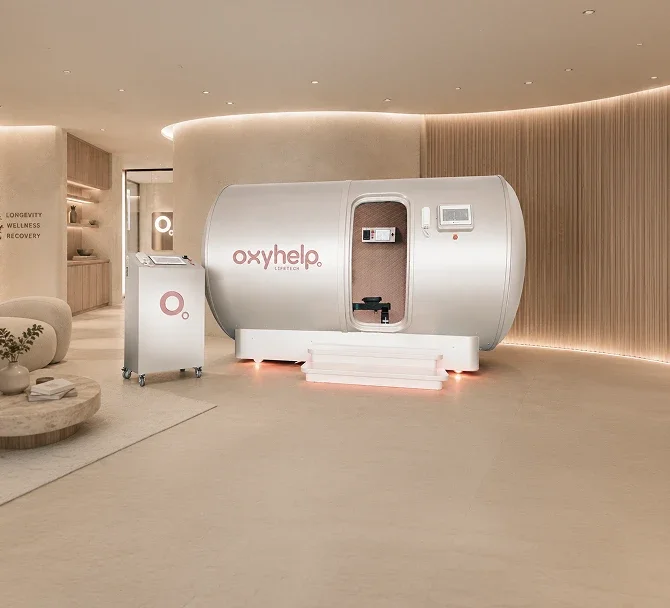
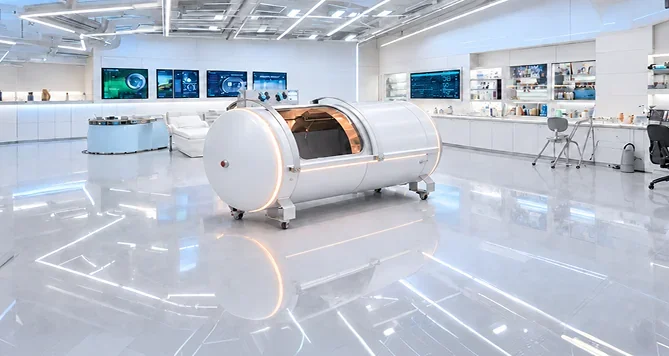
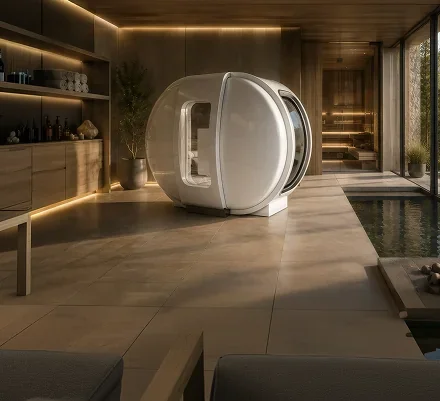
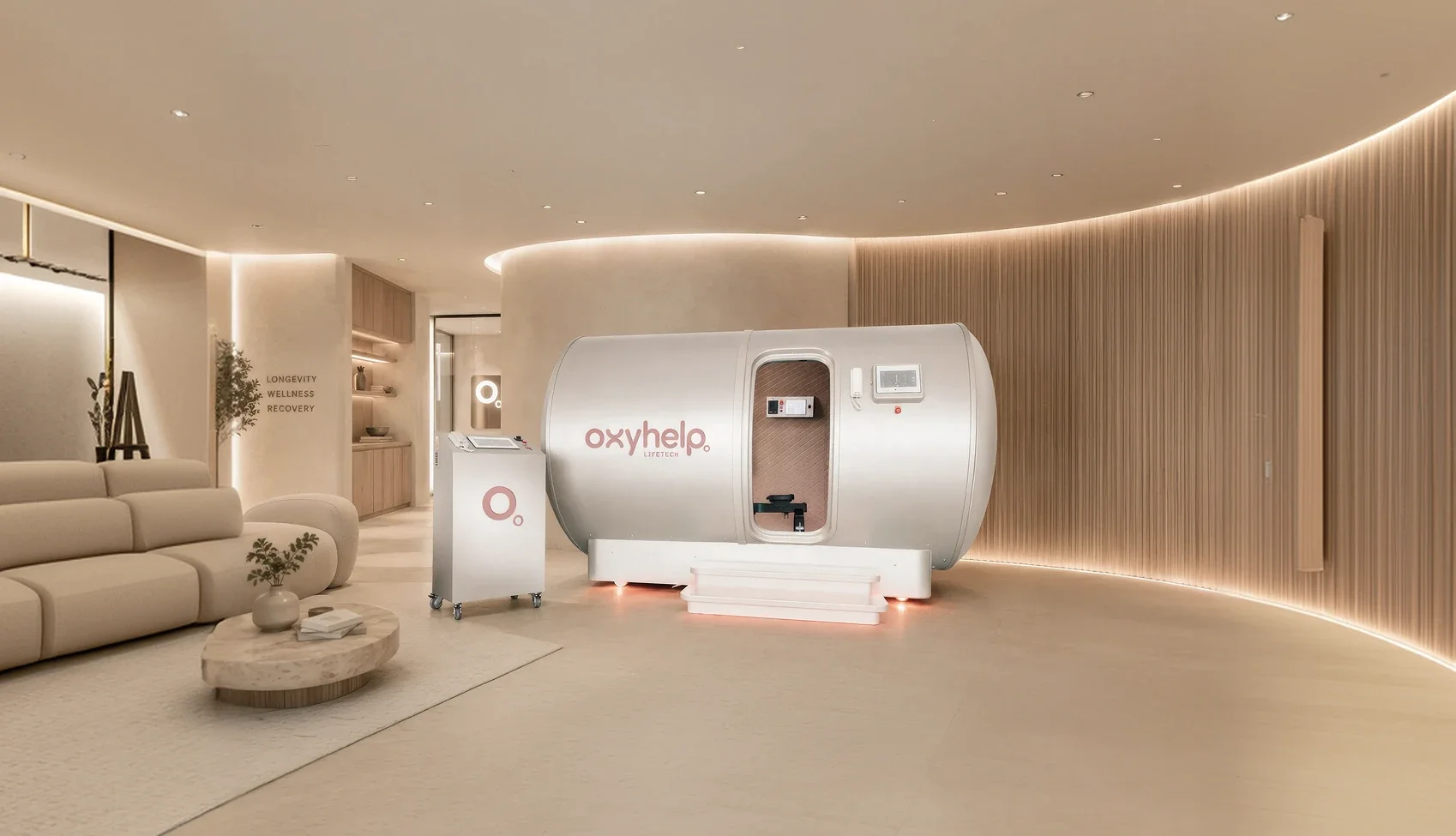
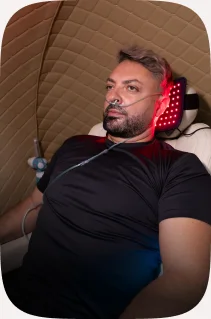
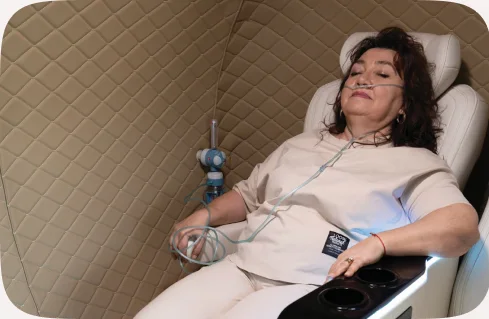
A wellness service guests cannot book at the spa down the road. The cabin is white aluminium and it reads as part of the room rather than as equipment. Inside, the pressure holds at a mild 1.5 ATA while the guest sits with a book or with nothing at all.

From day spas to longevity studios

Can a spa or wellness centre run a hyperbaric chamber?

A guest runs the session. Staff set the time on the touchscreen outside; from inside, the guest presses start and can stop the pressure at any moment. OxyHelp chambers are non-medical wellness devices, and no operator has to stay in the room.

Ordinary air fills the cabin at a mild 1.5 ATA. Extra oxygen, up to 32%, comes through a mask from a concentrator that separates it out of the room air. Athletes use this mild setting between training blocks. A spa guest sits in the same chamber for calmer reasons.

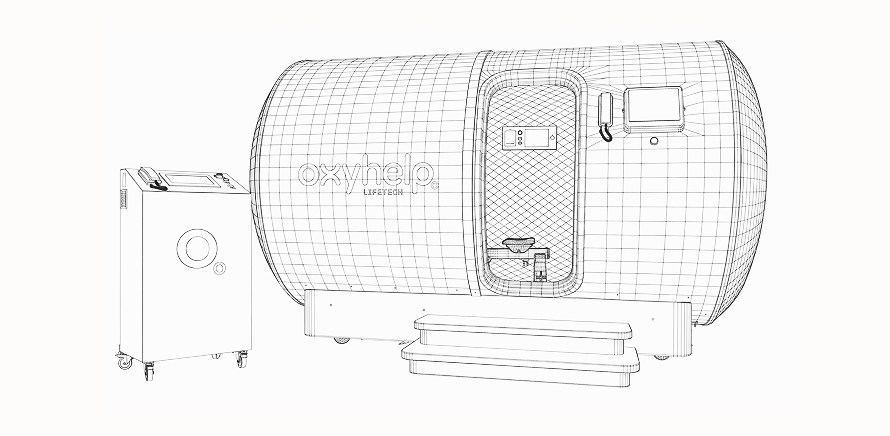
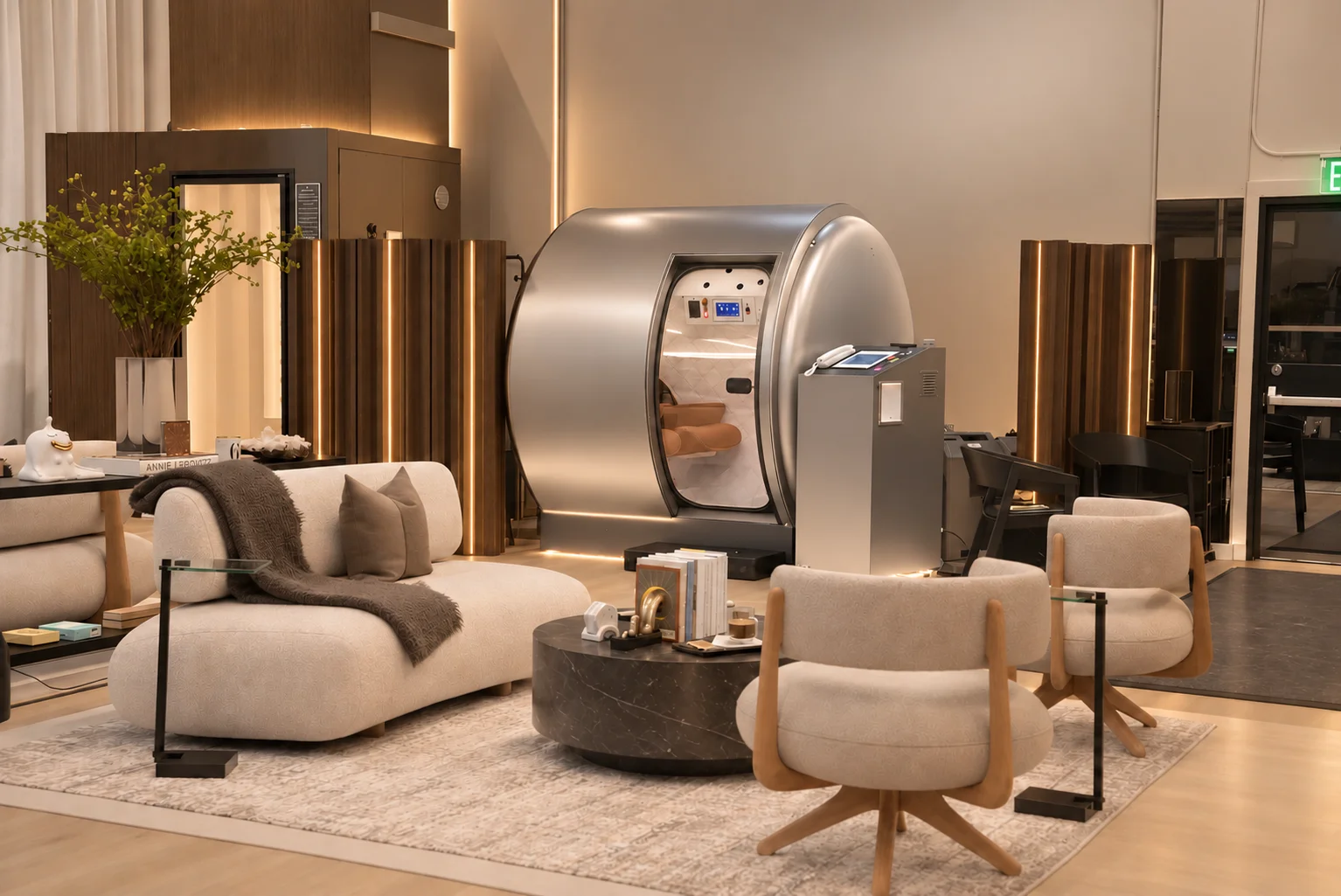
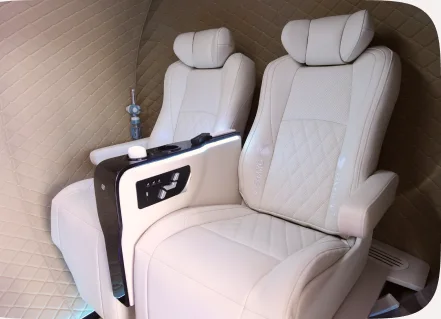
For a spa the recommendation is the OxyLife C, a multiplace cabin where a couple or a small group sit together. Inside, the VIP comfort seats each carry two USB ports, and an interphone reaches the staff outside.

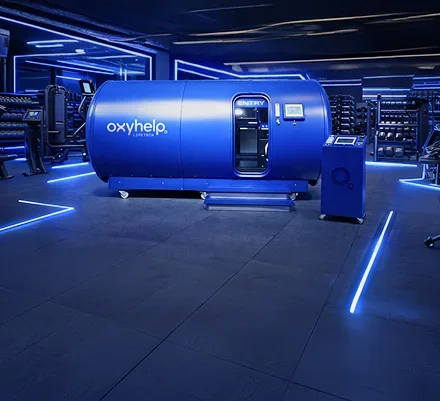
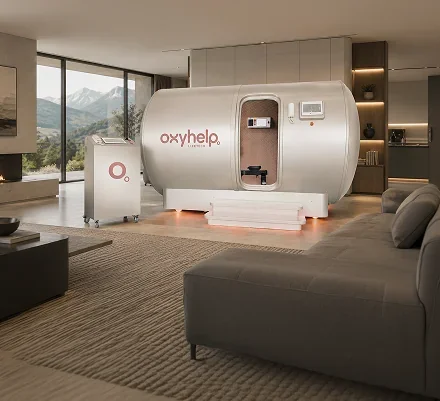
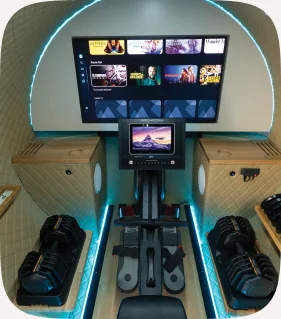
OxyHelp chamber installed in a treatment roomInterior of an OxyHelp chamber, seats and controls
Benefits

Why do spas add
a hyperbaric chamber?

Few spa guests have ever sat inside a hyperbaric chamber. Owners buy one for that, and for a handful of practical reasons.

  1. A first for most guests

    Hardly any guest has sat inside a hyperbaric chamber before, which makes the first booking an easy one to sell.

  2. The factory team trains the staff

    Onboarding and ongoing support come from the factory team that builds the chambers.

  3. Couples and small groups

    A pair or a group of friends can book one session together and sit in the same cabin.

  4. Fits a membership

    Wellness use sits at a gentle 1.3 to 1.5 ATA, comfortable enough for daily use.

  5. Fresh air the whole session

    Continuous ventilation pushes fresh air in and stale air out, which is what stops a cabin turning stuffy.

  6. Nothing to store, nothing to refill

    A concentrator separates oxygen out of the room air, which leaves no cylinders standing in a back room.

A session, start to finish

How does a session run in a spa or wellness centre?

OxyHelp chamber seen from the sideChamber interior with seatingControl panel of the chamberChamber door and frame detail

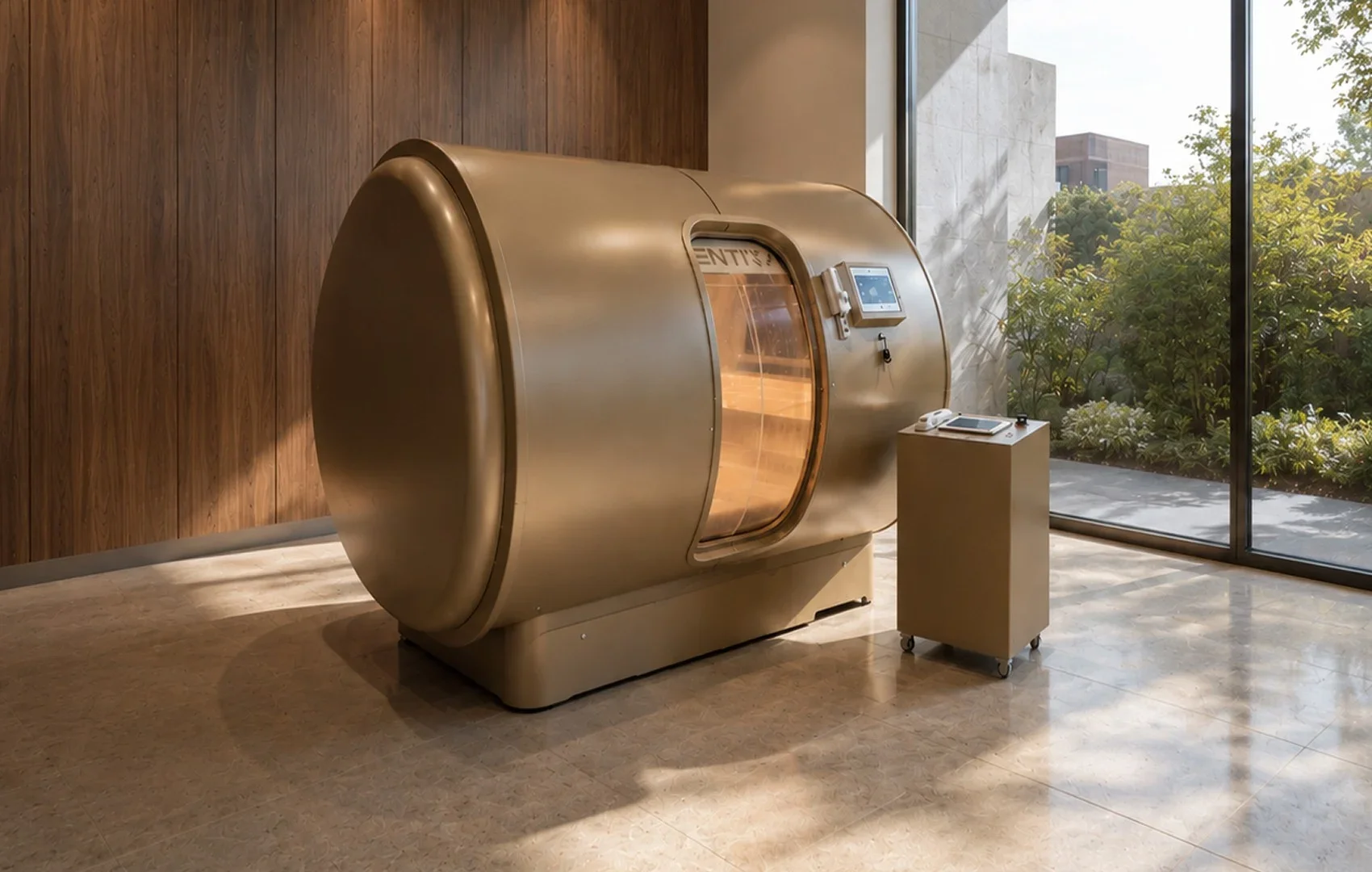
A member of the spa team sets the time on the 10-inch touchscreen outside. The guest steps in, takes a seat and presses start on the interior panel. Compression is gradual, at a speed the team can adjust, and automatic ear pressure relief handles the part guests worry about.

When the time runs out, the cabin comes back down to room pressure over about eight minutes. From inside, the door opens by hand at any point, and the guest can end the session early without asking anyone.

Cabin temperature depends mostly on how long the compressor has been running and on the body heat of the people inside. For sessions running back to back beyond an hour, the optional cooler keeps it comfortable.

The OxyLife C

Which chamber fits
your spa?

The OxyLife C arrives as modules and our engineers assemble it in the room, which is how a cabin this size reaches a floor that was finished years ago. Where a whole ring will not pass a doorway, the same chambers come as a split build. A doorway or a lift on the way in matters as much as the room itself.

Modular multiplace chambers

OxyLife C1 E

Five multiplace chambers, assembled on site from 76 cm modules. For locations where the chamber cannot be delivered in one piece.

Capacity
1 person
Dimensions
2707 × 1528 × 1982 mm
Internal volume
4730 L
Weight
850 kg
Module build
Standard
Modular multiplace chambers

OxyLife C2

Five multiplace chambers, assembled on site from 76 cm modules. For locations where the chamber cannot be delivered in one piece.

Capacity
1–2 persons
Dimensions
2188 × 1962 × 1974 mm
Internal volume
5030 L
Weight
670 kg
Module build
Standard or Split
Modular multiplace chambers

OxyLife C3

Five multiplace chambers, assembled on site from 76 cm modules. For locations where the chamber cannot be delivered in one piece.

Capacity
1–4 persons
Dimensions
2948 × 1962 × 1974 mm
Internal volume
7010 L
Weight
1100 kg
Module build
Standard or Split
Modular multiplace chambers

OxyLife C4

Five multiplace chambers, assembled on site from 76 cm modules. For locations where the chamber cannot be delivered in one piece.

Capacity
1–4 persons
Dimensions
3708 × 1962 × 1974 mm
Internal volume
8980 L
Weight
1450 kg
Module build
Standard or Split
Modular multiplace chambers

OxyLife C5

Five multiplace chambers, assembled on site from 76 cm modules. For locations where the chamber cannot be delivered in one piece.

Capacity
1–6 persons
Dimensions
4468 × 1962 × 1974 mm
Internal volume
10960 L
Weight
1650 kg
Module build
Standard or Split
Published research

What the published research says

Study summaries for reference. They are not claims about OxyHelp chambers, which are non-medical wellness devices.

Published

How evenly a chamber clears its own air

Diving and Hyperbaric Medicine

Researchers traced fresh gas through a hospital multiplace chamber and found under-ventilated pockets that a simple well-stirred model misses. They used oxygen as a tracer and did not measure CO2.

Published

Before and after exercise, reviewed

Frontiers in Physiology

A meta-analysis of ten studies, 166 participants in total, found no significant effect of hyperbaric oxygen before exercise on performance markers, or after exercise on recovery markers.

Published

Skin biopsies before and after 60 sessions

Aging

Thirteen men, average age 68, gave skin biopsies before and after 60 hospital sessions of 100% oxygen at 2 ATA. Collagen density and blood vessel count rose. Small, all male, no separate control group.

Published

Hyperbaric oxygen in aesthetics, reviewed

Aesthetic Plastic Surgery

A systematic review kept 15 of 591 articles on hyperbaric oxygen in aesthetics and anti-aging. Its conclusion: possibly useful, but the evidence to support it, and to justify its cost, is limited.

Published

One session and immune cells in 16 healthy women

Life

A crossover trial in 16 healthy young women: 70 minutes at 1.4 ATA with 35 to 40% oxygen. Natural killer cell counts rose, oxidative stress markers did not. One session, no health outcome followed.

Built-in safety

The numbers that keep you safe

Controller unit

One touchscreen runs everything: pressure, session time, cooling. Set it outside, press start inside. Nothing to learn twice.

Pressurization
Automated, gradual
External control
Color touchscreen
Internal control
Start / Stop, cooling
Ear equalizer
Manual or automatic

Safety & verification

Every layer is doubled: manual and software protection, stop buttons inside and out, and a chamber that releases itself if power ever fails.

Overpressure protection
Manual + software
QuickStop button
Inside & out
Emergency depressurization
40 seconds
Power failure
Auto-depressurizes
Incidents to date
0

Pressure & oxygen

A gentle 1.5 ATA by design, on a shell tested well beyond it. Oxygen comes from a concentrator, no cylinders, no refills. Airflow is calculated from the metabolism of the people inside, not set to a fixed rate.

Tested at
2.4 ATA
Oxygen
32%, via mask/cannula
Source
Concentrator, no cylinders
Ventilation
Sized by metabolism
FAQ

Questions before you buy

The guest does. Staff set the time on the panel outside, the guest presses start from inside and can stop the pressure at any moment, and the door opens by hand. The chamber is built for self use. Professional partners get onboarding, operating protocols and ongoing support from the factory team. Rules on supervision vary between countries; a spa should confirm what applies locally.

No. Ordinary air fills the cabin at a mild 1.5 ATA. Extra oxygen, up to 32%, comes through a mask or cannula from a concentrator that separates it out of the room air. Pure-oxygen chambers exist in hospitals, with the fire precautions that requires.

It depends on the model. The OxyLife C line runs from one seat in the C1 E to six in the C5, with two-seat and four-seat models in between. Every seat has two USB ports and an interphone, and the cabin ventilates continuously for everyone inside.

Our engineers plan every multiplace installation room by room. The C2 to C5 shells are 1962 mm wide, about 2.3 m once the stairs are counted, and between 2188 and 4468 mm long. The chamber arrives as modules for assembly in the room, and where a whole ring will not pass a doorway, the same chambers come as a split build. The narrowest point of the route in counts as much as the room: doorways, lifts and corners decide what can be carried through.

Yes. Sessions run on a pre-set time and end with a slow automatic depressurisation of around eight minutes, so the next guest can follow. Cabin temperature depends mostly on how long the compressor has been running and on body heat. For continuous use beyond an hour, the optional cooler keeps the cabin comfortable.

Discover our professional products

Download the
brochure

The full OxyLife range in one PDF. Every model, every spec, every certification, with the detail your team wants before a conversation.

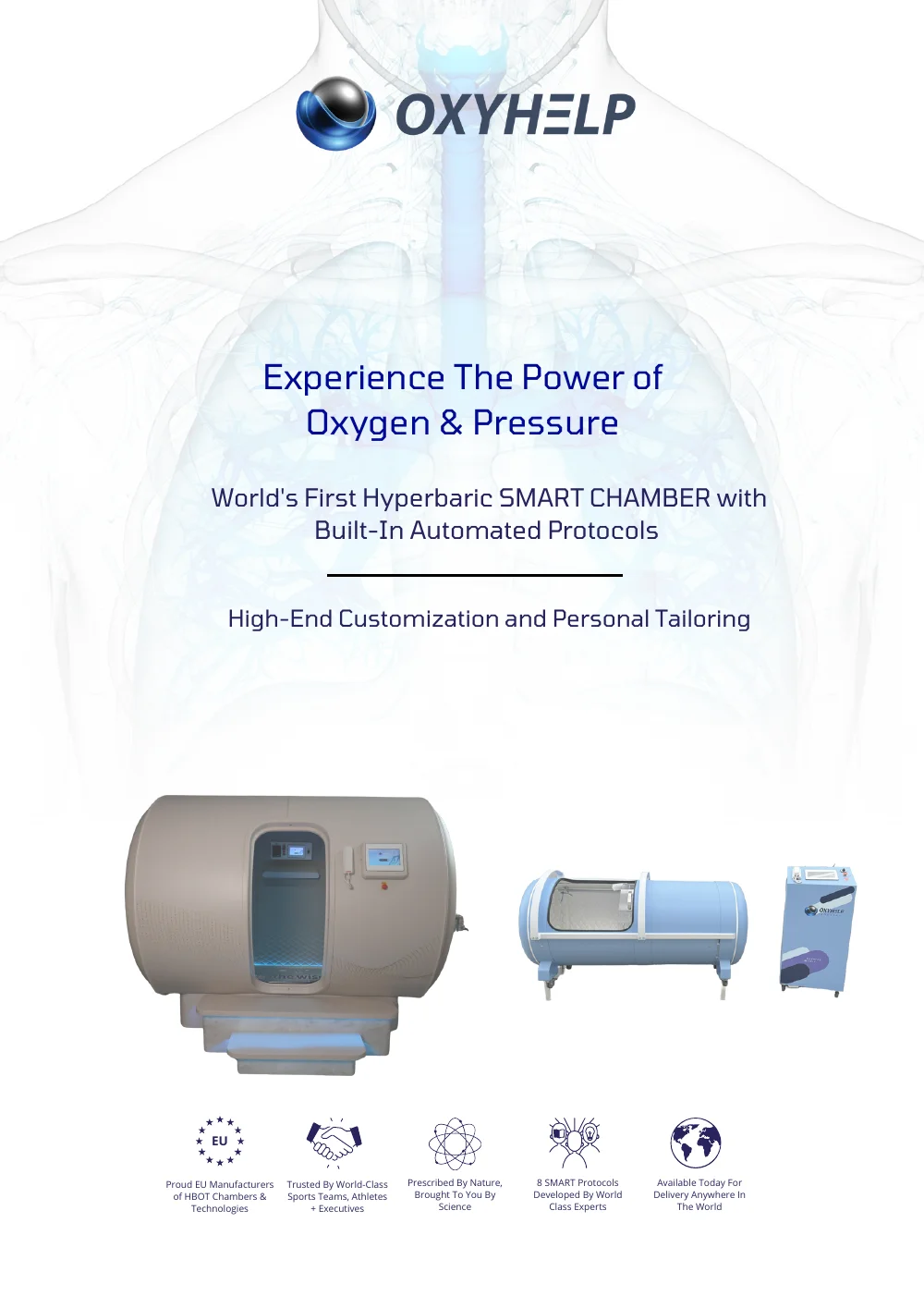
Cover of the OxyHelp brochure: the OxyLife chamber range, Experience the power of oxygen and pressure
Why customers choose us

Easy to install.
Low-maintenance.
Worldwide service.
Adaptable for any business.

Write to us

Send us a message

We’d love to hear from you. Fill out the form and we’ll get back to you as soon as possible.

Download

Tell us who you are and the download starts right away.