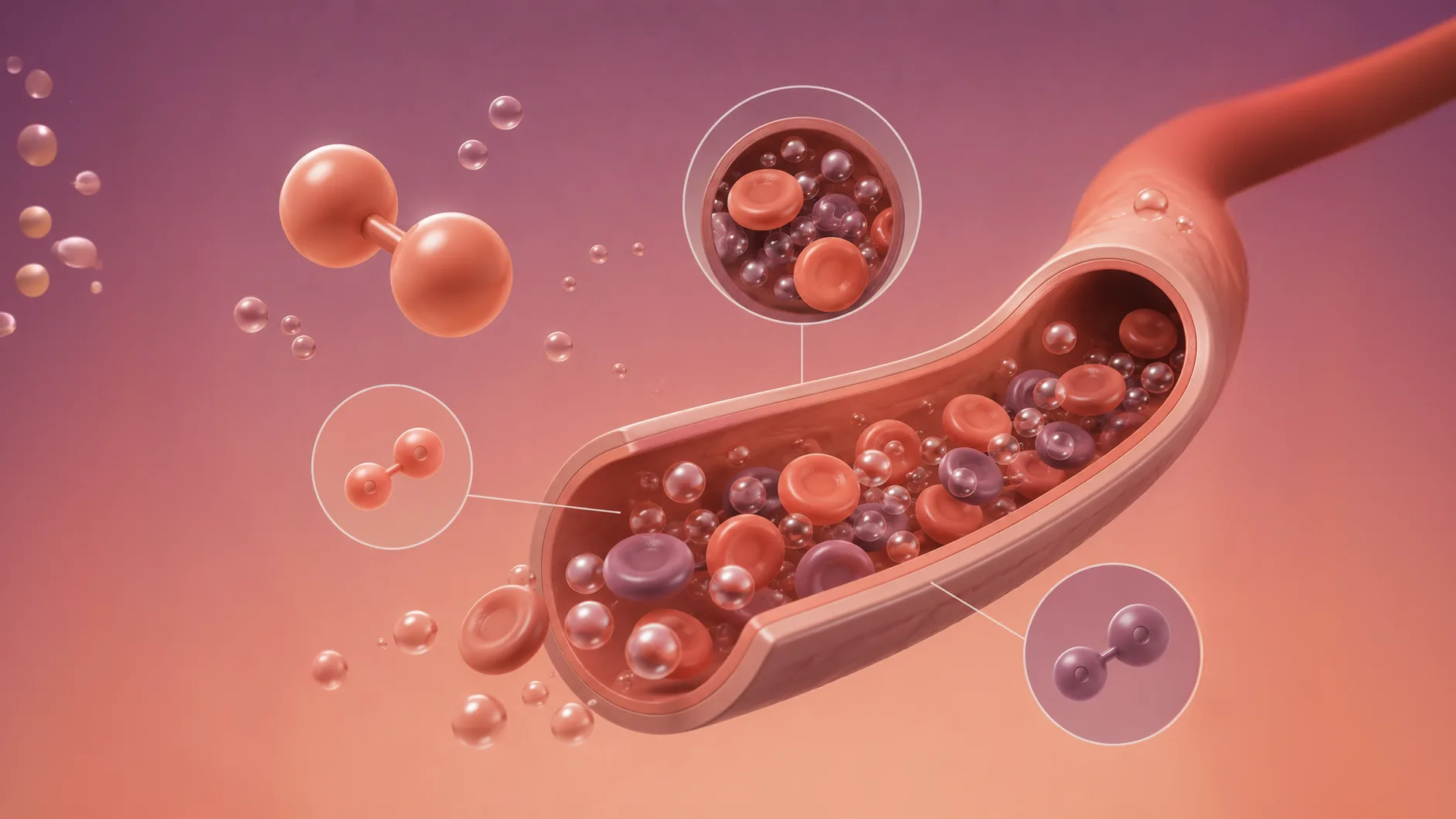
Oxygen behaves like a dose, not like a resource. Air at sea level is 21 percent oxygen at one atmosphere of pressure, which puts the partial pressure in your lungs at about 0.21 ATA. That figure is what your tissues actually respond to. The percentage on its own tells you very little, because changing the pressure changes the dose without touching the percentage at all.
So 100 percent reads like an upgrade and behaves like an overdose. Pure oxygen at normal pressure already puts you near five times the partial pressure you evolved to breathe. Put that same pure oxygen inside a chamber running at two atmospheres and you are at ten times. Physiologists have been measuring what happens past that point since the 1870s, and the findings have held up.
The chemistry that makes oxygen useful is the same chemistry that makes it harmful in excess. Every cell that burns oxygen also produces reactive species as a by-product. At normal loads your antioxidant systems clear them, and the small surplus works as a signal that tells tissue to adapt. Raise the load far enough and the clearing stops keeping up.
Two limits, both well documented
The first limit is pulmonary. Breathing high partial pressures for hours irritates the lining of the airways, an effect J. Lorrain Smith described in 1899. It builds slowly and it accumulates, which is why supervised protocols track total exposure across a whole course of sessions rather than looking at any single one.
The second limit is neurological, and Paul Bert reported it in 1878. Above a partial pressure of roughly 1.6 ATA the central nervous system becomes the binding constraint, and the risk climbs steeply instead of gradually. This is why clinical protocols schedule air breaks. Dropping the partial pressure for a few minutes lets the clock reset.
Neither effect is obscure. Both are the reason every serious hyperbaric protocol is written as a pair of numbers, pressure and time, and never as a single percentage on a spec sheet.
Why more is not the same as better
The useful part of hyperbaric exposure is an adaptive response. A moderate, intermittent rise in oxygen availability reads to tissue as a signal worth answering. Push that signal past the point where the body can manage it and the response inverts. Instead of adapting, cells spend their capacity on damage control.
That inversion is why the dose curve bends back on itself. There is a range where more helps, a plateau where more changes nothing, and a region past it where more costs you something. Advertising the highest number available means advertising from the wrong end of that curve.
It also explains a practical point that gets lost in the specification war. A session mild enough to repeat daily, at home, without supervision, is worth more across a year than a stronger session you can only tolerate now and then. Wellness chambers sit between 1.3 and 1.5 ATA for exactly that reason. Above 2.0 ATA you have left wellness and entered supervised territory, where the numbers stop being a selling point and start being a responsibility.